
Self Etching Primer for Fabrication: Choosing the Right Base for Bare Metal
Choosing Self Etching Primer for Bare Metal Fabrication
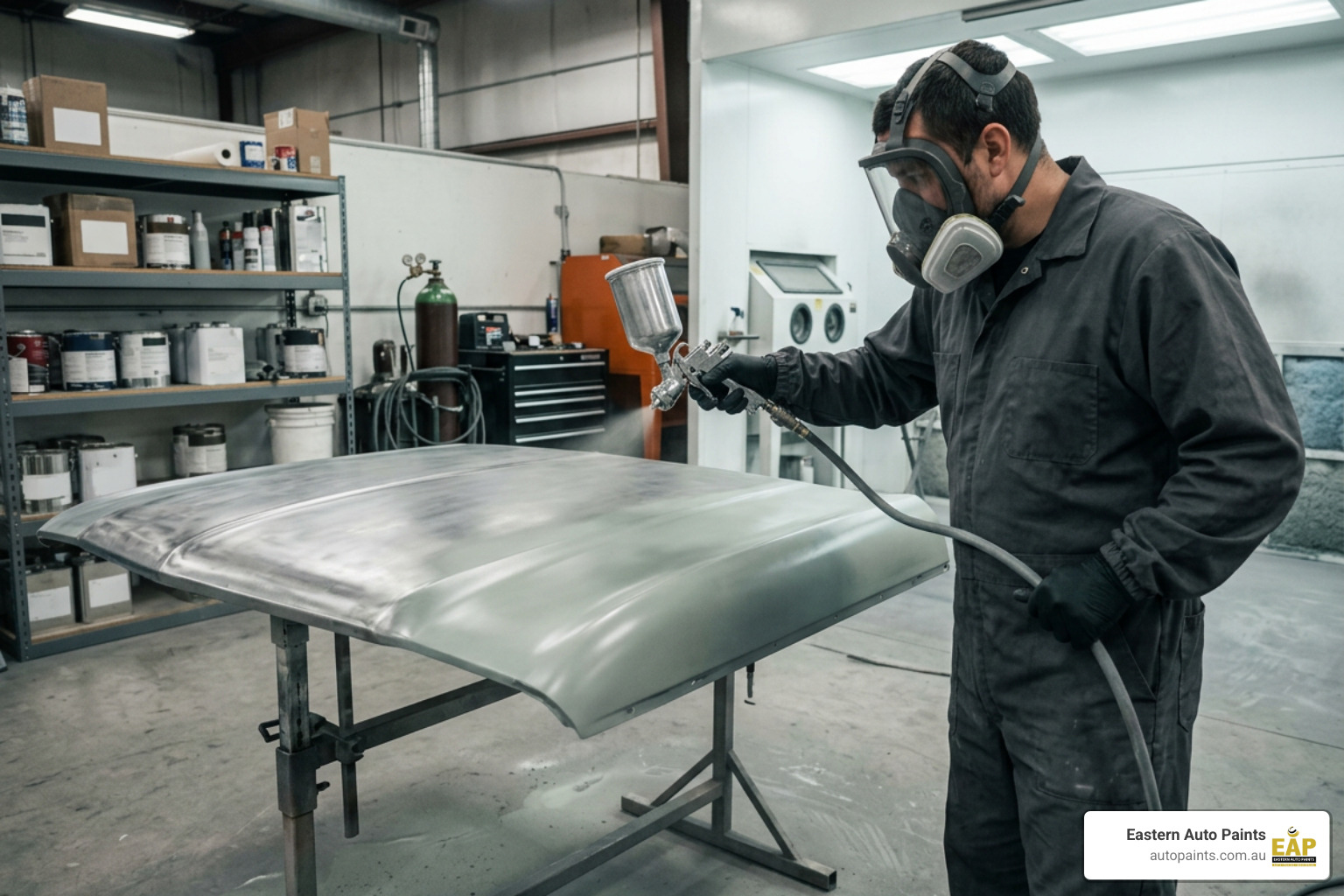
At Eastern Auto Paints, we see the difference between a fabrication job where paint bonds reliably and one where it lifts, flakes, or corrodes from the edges. Self etching primer for fabrication is a strong starting point for clean, bare steel, aluminium, galvanised metal and some fibreglass parts: remove rust and contamination, abrade the surface, apply thin, even coats, then follow the product's approved recoat system. Its acid component creates a chemical key on suitable metal, while the primer film gives the next coating something stable to bond to.
Key Takeaways
- Use self-etching primer on properly prepared bare metal where fast adhesion is the priority.
- Keep coats light and even. Heavy application can trap solvent and reduce coating performance.
- Check compatibility before applying epoxy, high-build primer, filler, or a two-pack (2K) topcoat.
- For a broader look at selecting a direct-to-metal coating, see our Bare Metal Primer Guide 2026.
We help trade applicators, fabricators and serious vehicle restorers choose coating systems rather than isolated products. Our approach is to match the primer to the substrate, the finish required and the full paint system, particularly where welded repairs, smooth aluminium panels or galvanised components need dependable adhesion.
A quality finish starts well before colour is applied. By preparing the metal carefully, respecting flash-off and recoat requirements, and using compatible layers, you give fabricated parts a far better foundation for a durable professional finish.
Why This Issue Should Not Be Ignored
Applying topcoats directly onto raw fabrication steel or smooth aluminium without an active bonding layer creates severe long-term adhesion risks. Bare metal constantly reacts with atmospheric moisture and oxygen, initiating microscopic oxidation that breaks weak physical paint bonds.
When a coating system loses adhesion, moisture creeps beneath the film, resulting in edge peeling, blistering, and rust creep beneath the painted surface. Using the correct direct-to-metal etching foundation ensures chemical passivity and establishes a reliable anchor profile for your subsequent build coats and topcoats.
Common Symptoms, Challenges, or Questions
Fabricators often face specific hurdles when preparing bare metal assemblies:
- Poor Topcoat Adhesion: Paint flaking off sharp edges, folds, or smooth aluminium sheets after curing.
- Weld Zone Corrosion: Premature corrosion forming along heat-affected zones and ground weld seams.
- Coating System Lifting: Wrinkling or delamination when applying high-build surfacers or topcoats over improperly dried primers.
- Substrate Variety: Determining whether mild steel, aluminium, and zinc-coated metals can be coated with the same primer system.
Understanding Self Etching Primer for Fabrication

Self-etching primer combines an acid agent, corrosion-inhibiting pigments such as zinc phosphate, and a synthetic resin binder into a single formulation. The acid chemically micro-etches the metal substrate, while the resin and pigments deposit a protective film over the newly created profile.
Chemical Mechanism and Metal Substrate Suitability
The chemical reaction relies on mild phosphoric acid working directly on raw metal surfaces. The acid dissolves a microscopic layer of surface metal, forming a fine phosphate conversion layer that anchors the resin matrix. This chemical tooth provides superior mechanical adhesion compared to standard direct-to-metal barrier primers applied to un-etched metal.
Self-etching primers excel on:
- Clean mild steel and hot-rolled sheet with mill scale removed
- Bare aluminium panels and extrusions
- Stainless steel components
- Galvanised steel sheet and zinc-plated brackets
Etch primers should not be applied directly over polyester body fillers, cured synthetic enamels, or existing thermoplastic acrylics, as the solvent and acid components can soften or lift these materials.
Advantages of Self Etching Primer for Fabrication
For busy fabrication workshops, self-etching primer offers rapid process flow. It eliminates the need for standalone chemical conversion wash baths or manual acid-etching solutions. Formulations such as Concept 103 Etch Primer and Protec EPS Etchpro provide immediate substrate passivity and fast flash-off properties, allowing fabrication teams to prime assemblies quickly before atmospheric flash rust develops.
Comparing Etch Primers with Alternative Metal Primers
Selecting the correct primer requires evaluating substrate demands, exposure conditions, and the required topcoat system. For an overview of primer chemistry, explore our guide on choosing auto paint primers.
Etch Primer: Strengths on Its Own Merits
- Provides direct chemical bonding to non-ferrous metals like aluminium and galvanised steel.
- Features rapid flash-off and quick handling times for fabrication assembly.
- Offers a thin, flexible film that protects intricate profiles and tight seams without excessive build.
Epoxy Primer: Strengths on Its Own Merits
- Forms an impervious, dense physical barrier against water and chemical exposure.
- Compatible with direct polyester body filler applications over the cured primer film.
- Delivers exceptional corrosion resistance for harsh marine and industrial environments.
Zinc-Rich Primer: Strengths on Its Own Merits
- Provides active galvanic protection through sacrificial zinc content.
- Protects structural steelwork exposed to aggressive outdoor environments.
- Self-heals minor scratches through cathodic reaction.
High-Build Primer: Strengths on Its Own Merits
- Provides substantial dry film thickness to level sanding scratches and minor surface flaws.
- Sands easily to produce a refined surface for high-gloss automotive finishes.
- Acts as a uniform intermediate surfacer between bare metal primers and topcoats.
Decision Guide: Mapping Job Needs to Primer Type
| Requirement | Recommended Primer Base | Primary Substrate Suitability | Key Advantage |
|---|---|---|---|
| Fast Turnaround Fabrication | Self-Etching Primer | Steel, Aluminium, Galvanised | Fast flash, excellent chemical adhesion |
| Severe Chemical / Moisture Exposure | Epoxy Primer | Sandblasted Steel, Clean Aluminium | Dense moisture barrier, high chemical resistance |
| Heavy Structural Protection | Zinc-Rich Primer | Structural Mild Steel | Sacrificial galvanic rust protection |
| Surface Levelling & Refinishing | High-Build Primer Surfacer | Primed Metal, Sanded Substrates | High film build, easy block sanding |
Selecting the Best Self Etching Primer for Fabrication Tasks
For spot repairs, quick bracket fabrication, or smaller assemblies, aerosol systems from our primer aerosol collection offer convenient application without requiring spray gun clean-up. When running larger production jobs or complex structural frameworks, bulk one-pack (1K) and two-pack (2K) etch primers like Concept Paints 110 Metal Etch Primer and Protec PPG Grey Black Etch Primer provide consistent atomisation control and durable coverage across broad surface areas.
Etch Primer vs Epoxy and High-Build Systems
Understanding film build characteristics helps prevent substrate failures. Self-etching primers are designed to go on thin; heavy coats pool excess acid and hinder proper curing. In contrast, epoxy primers offer high build and total barrier sealing, as detailed in our guide on epoxy vs urethane primer. When maximum environmental resistance is needed on restored body panels, trade applicators frequently select high-performance epoxy formulations, explored in our review on how to stick it to rust with the best epoxy primer for metal.
Step-by-Step Metal Preparation and Application Guide

A high-performance coating requires rigorous surface preparation. Review our advice on how to prepare your panel for painting for comprehensive workflow details.
Surface Cleaning, Mechanical Abrasion, and Degreasing
- Degrease Substrate: Clean the raw metal using a dedicated wax and grease remover. Wipe in one direction with clean, lint-free cloths to lift processing oils and cutting fluids rather than spreading them across the metal.
- Remove Scale and Rust: Mechanically grind or sand away mill scale, rust, and weld spatter. Heavy scaling must be removed back to clean, bright steel.
- Key the Profile: Abrade smooth bare metal and aluminium using quality sanding sheets to create an even mechanical scratch pattern.
- Final Clean: Blow down the fabrication using clean, dry compressed air, then perform a final wipe with solvent degreaser. Allow all cleaning solvents to evaporate completely before spraying.
Proper Spray Application, Coat Thickness, and Flash Off
Apply etch primer using professional spray guns and accessories or calibrated aerosol cans.
- Maintain a consistent gun distance from the panel in line with manufacturer specifications.
- Apply light, uniform passes with an even overlap pattern.
- Avoid heavy, wet passes that can flood acid into panel seams or inner corners.
- Application rates, coat recommendations, and drying times vary by product; always consult the manufacturer's technical data sheet (TDS) or product label before starting your paint job.
Compatibility, Recoating, and Avoiding Common Pitfalls
Chemical compatibility is critical when layering modern paint systems over etch primers.
Managing Topcoats and Intermediate Primer Layers
Self-etching primer is an adhesion base, not a high-build surfacer. After applying an etch primer, apply an intermediate primer surfacer if you need to level surface imperfections before your final topcoat.
Once intermediate primers are cured and sanded, finish with your selected industrial enamel or high-durability 2K factory top coat. Always verify the recoat window specified on the product label to ensure inter-coat adhesion without trapping active solvents.
Workshop Handling, Storage, and Safety Best Practices
Etch primers contain active acids and volatile organic solvents.
- Store containers upright in a cool, well-ventilated, flame-proof cabinet away from direct heat sources and sunlight.
- Always use dedicated paint vapour extraction when spraying indoors.
- Do not state specific personal protective equipment (PPE) requirements as blanket rules; direct readers to the product label/TDS and relevant SafeWork or WorkSafe guidance for product-specific PPE needs.
- Trade applicators should ensure compressed breathing systems, masks, and airlines meet current workplace safety regulations.
What a Personalised Experience Actually Looks Like
When you consult our team, we do not simply hand over a can of primer. We assess your entire production sequence: the specific metal alloy you are welding, your shop temperature conditions, your available spray equipment, and your desired topcoat durability. We tailor product recommendations so your primer, surfacer, and finish coats work seamlessly together as a unified system.
The Value of Consistency and an Ongoing Relationship
Fabrication businesses and restoration workshops benefit from consistent, reliable coating supplies. By partnering with a dedicated trade supplier, you eliminate guesswork regarding batch consistency, product shelf-life, and chemical compatibility. Ongoing support means you receive up-to-date technical data sheets, immediate troubleshooting advice for unexpected substrate reactions, and reliable supply continuity for all your workshop consumables.
What to Expect at Eastern Auto Paints
At Eastern Auto Paints, our team brings deep technical expertise to automotive, commercial, and industrial refinishing. Operating across our Victorian branch network, we provide trade-qualified advice, advanced colour matching technology utilised alongside experienced professionals, and an extensive inventory of primers, clears, topcoats, and spray equipment. Whether you are outfitting a full-scale fabrication booth or restoring a custom vehicle chassis, we ensure you have the exact coatings and technical guidance required for a lasting finish.
When to Get in Touch or Take Action
If you are setting up a new metal fabrication run, experiencing paint lifting on aluminium assemblies, or unsure which primer system best suits your project, reach out to our technical team via our contact page. Our specialists in Bayswater and Dandenong South are ready to help you specify the right coating system from bare metal to clear coat.
Explore our comprehensive coatings and equipment collections to support your workshop:
- Aerosol Spray Solutions
- Primer Systems
- Spray Guns and Accessories
- Sanding Discs and Sheets
- Workshop Equipment
- Contact Eastern Auto Paints
Frequently Asked Questions About Self Etching Primer
Can you apply polyester body filler over self-etching primer?
Polyester body fillers should not be applied directly over self-etching primer. The organic peroxide hardeners in polyester body filler react negatively with the acid in the primer film, leading to uncured, gummy filler and adhesion failure. Always apply body fillers directly to properly prepped bare metal or over an approved, fully cured epoxy primer system, according to the manufacturer's technical data sheet.
Can self-etching primer be used as a standalone protective finish?
Self-etching primer is not intended to serve as a standalone, weather-exposed finish coat. Etch primer films are thin and slightly porous, designed primarily to chemically key into bare metal and provide an adhesive foundation for subsequent coatings. Leaving an etch primer unsealed outdoors allows moisture to penetrate over time, eventually leading to substrate corrosion. It must be sealed with a suitable intermediate primer, sealer, or topcoat system.
Why do some epoxy primers lift when applied over self-etch primer?
Some epoxy primers contain amine catalysts that react chemically with the residual phosphoric acid in self-etching primers. This acid-base conflict can prevent the epoxy from fully cross-linking and curing at the interface, causing the coating to wrinkle, lift, or peel away. Always review product technical sheets for system compatibility, or apply epoxy primer directly to clean, profiled bare metal instead.
What is the difference between 1K and 2K self-etching primers?
A 1K self-etching primer is a single-pack product that dries primarily through solvent evaporation without requiring a separate chemical hardener, making it convenient for fast spot repairs and small parts. A 2K etch primer uses a dedicated chemical activator or catalyst that cross-links with the resin base, offering enhanced film toughness, superior chemical resistance, and increased corrosion protection for heavy-duty fabrication projects.
How do you know when self-etching primer is ready for the next coat?
Self-etching primer dries rapidly to a uniform, matte finish once the carrier solvents flash off the surface. The exact drying, flash-off, and overcoat windows vary significantly depending on ambient workshop temperature, humidity levels, airflow, and specific brand chemistry. Always consult the manufacturer product label and technical data sheet for precise recoat timing before applying intermediate surfacers or topcoats.