
Unclogging the Mystery: Getting Dried Paint Out of Your Pressure Pot Hose
Why Clean Hoses Matter for Professional Results
Paint pressure pot hoses are the critical link between your pressure pot and spray gun. They carry paint and air under pressure to deliver a smooth, consistent finish. When dried paint clogs these hoses, it blocks flow, reduces atomization, and can ruin an entire paint job. Keeping your hoses clean is essential for maintaining spray quality and avoiding costly downtime.
Quick Steps to Clean Dried Paint from Hoses:
- Safety First: Wear proper PPE and work in a well-ventilated area.
- Choose the Right Solvent: Match the solvent to your paint type.
- Flush and Soak: Push solvent through the hose, then let it soak for 30 minutes to several hours.
- Mechanical Cleaning: Use brushes or compressed air to dislodge stubborn clogs.
- Final Rinse and Inspection: Flush with clean solvent, dry with compressed air, and inspect for damage.
If you're dealing with a stubborn blockage, the paint has likely bonded to the hose interior. The longer it sits, the harder it is to remove. In many cases, replacing the hose is more cost-effective than attempting a difficult restoration. Proper cleaning or timely replacement will save you time and frustration.
The Step-by-Step Guide to Cleaning Dried Paint from Your Hose
Cleaning dried paint from your paint pressure pot hoses is about more than just restoring flow. It’s about protecting your equipment, maintaining spray quality, and avoiding the frustration of a ruined finish. A methodical approach can often restore hoses that seem beyond saving. For a complete overview of your system, see our guide on Mastering Pressure Pots: Everything You Need to Know for Perfect Painting.
Safety Preparations
Before you begin, prioritise safety. Solvents and paint products, especially automotive spray paint and 2K clear, contain harmful chemicals.
Personal protective equipment (PPE) is essential. At a minimum, wear chemical-resistant gloves and eye protection. For 2K systems containing isocyanates, an Air Fed Mask is necessary, as it supplies clean air from an external source. Our Complete Guide to Air Fed Face Masks for Automotive and Industrial Work explains why this is critical. Find the right protection in our range of PPE masks and masks and airlines.
Always work in a well-ventilated area, like a spray booth, and keep solvents away from ignition sources. Before disconnecting any hoses, release all pressure from the system by turning off the air supply, opening the pressure pot's relief valve, and triggering the spray gun into a waste container.
Choosing the Right Cleaning Solvent
Using the correct solvent is crucial. For water-based paints, warm, soapy water is effective. For solvent-based paints like 2K primers or Automotive or Industrial Paint Systems, you'll need a compatible solvent like 2k thinner, acetone, or a professional gun wash. Always check the paint's technical data sheet if you're unsure.
Ensure the solvent is compatible with your hose material, as aggressive cleaners can cause damage over time. You can find everything you need in our Clean Up & Recycling range. For busy workshops, a solvent recycling machine is a smart investment. We carry UK-made UNIC-USD45XPE-Solvent-Recycler and UNIC-USD60XPE-Solvent-Recycler units that purify used solvents for reuse, saving money and reducing waste.
The Flushing and Soaking Process
Start with an initial flush. Disconnect the paint pressure pot hoses and pour a small amount of solvent through the fluid hose into a waste container to remove wet paint.
For dried paint, fill the hose with solvent, cap both ends if possible, and let it soak. For recent clogs, 30 minutes may be enough, but paint dried for weeks may require several hours. After soaking, force fresh solvent through the hose using your cleaned pressure pot or low air pressure (20-30 PSI) from a compressor. Direct the outlet into a sealed waste container and continue flushing until the solvent runs clear. We stock reliable Anest Iwata compressors like the Anest Iwata ECO15 MK2 that provide consistent airflow for this task.
As a last resort for hardened paint, you can use a chemical stripper from our Paint Stripping collection, but be aware these aggressive products can damage hoses.
Final Rinse and Inspection
Don't skip the final steps. First, perform a neutralising rinse by flushing the hose with clean solvent to remove any remaining residue. This prevents contamination in your next paint job.
Next, use compressed air to thoroughly dry the inside of the hose. Any leftover moisture or solvent can ruin your finish. Our range of Compressors, from compact models to larger workshop units like the Anest Iwata Trinity15 MK2, can provide the necessary airflow.
Finally, inspect the hoses and fittings for damage. Look for cracks, bulges, kinks, or hardening, especially near the fittings. A compromised fitting can cause leaks and affect performance. If you find any damage, it's safest to replace the hose. Explore our range of Pressure Pots & Hoses to find the right replacement.
Understanding Your Paint Pressure Pot Hoses to Prevent Clogs
Think of your paint pressure pot hoses as the arteries of your spray system. They are precision components that determine whether you get a flawless finish or a spattered mess. Understanding how they work and what they're made of is the key to preventing clogs before they start.
Matching the right hose to your application is crucial. A hose designed for thin automotive spray paint might struggle with thicker materials like epoxy floor paint. The material, diameter, and construction all play a role in smooth paint flow. Explore our full range of Pressure Pots & Hoses to find components that match your needs.
Types of Hoses for Pressure Pot Systems
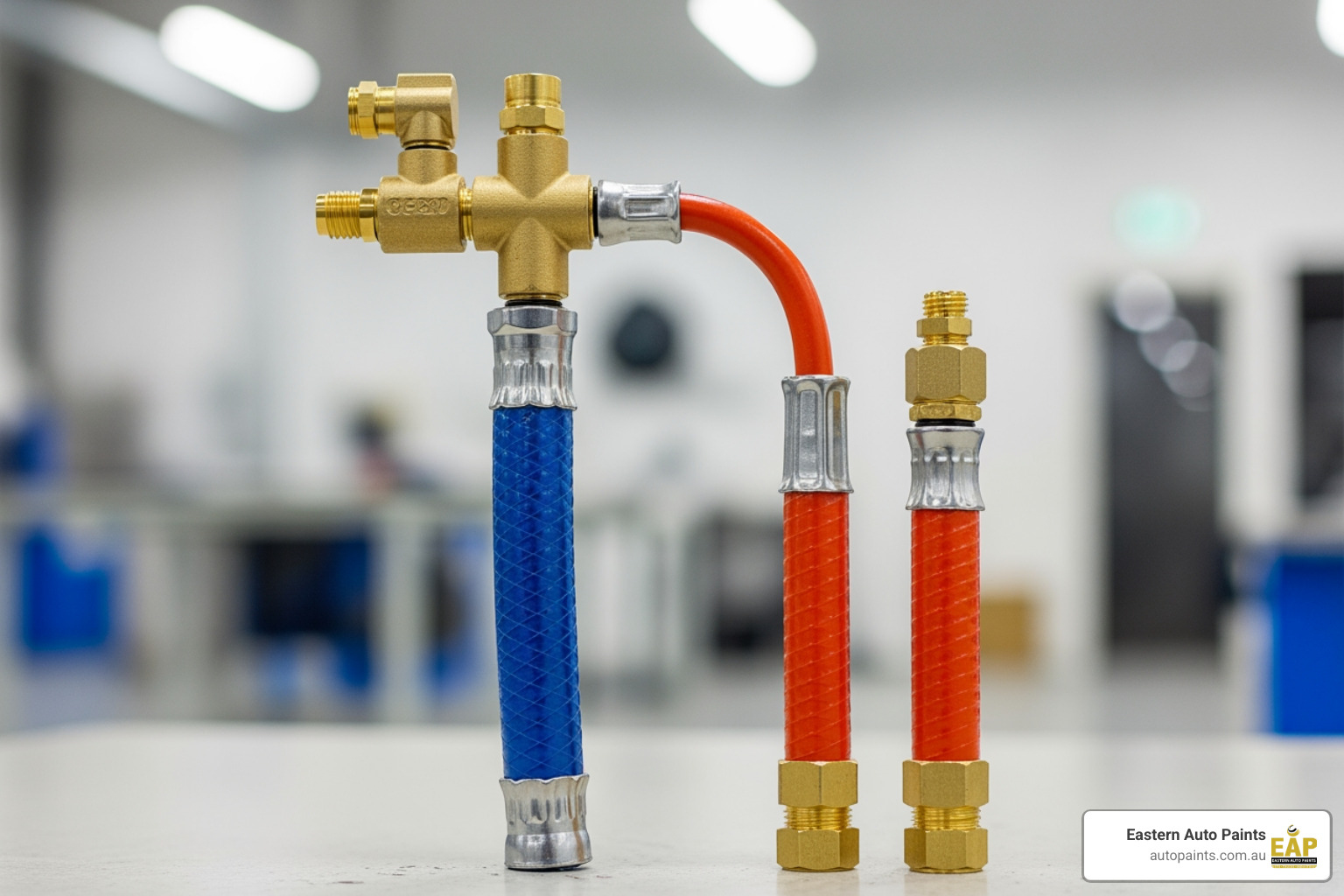
A pressure pot system uses two distinct hose types:
- Air Hoses: Carry compressed air from your compressor to pressurise the paint pot and to provide atomisation air at the spray gun. They typically have a larger diameter to ensure adequate airflow without pressure drops.
- Fluid Hoses: Transport paint from the pot to the gun. They must be chemically resistant to the coatings you use, whether it's Protec basecoat and topcoat or PPG Industrial Paints. Their internal diameter is critical for managing paint viscosity.
- Twin Hose Assemblies: Combine both air and fluid lines into a single, jacketed unit. This convenient setup reduces clutter, prevents tangling, and creates a more professional and organised workspace.
Specialised air-assisted airless (AAA) hoses are used for AAA sprayers, which operate at much higher pressures than standard pressure pot systems.
Common Hose Materials and Their Properties
The material of your paint pressure pot hoses determines their durability and performance.
- Polyurethane: A popular choice for its excellent flexibility, light weight, and superior chemical resistance to most solvents. This durability makes it a cost-effective, long-lasting option.
- Polyamide (Nylon): Often found in lightweight twin hose assemblies, it offers a great balance of flexibility, durability, and affordability for standard HVLP setups.
- Rubber: The traditional option, known for its robustness and general workshop durability. However, rubber hoses are often stiffer and heavier than modern synthetic materials, especially in cooler temperatures.
Quality hoses also feature braided reinforcement using high-tensile synthetic fibre. This reinforcement increases the hose's pressure rating without adding significant weight or reducing flexibility. You can find options for various applications in our selection of Low Pressure Hoses.
The Advantage of a Twin Hose Assembly
A twin hose assembly is one of the simplest upgrades for improving daily operations. By binding the air and fluid lines into a single jacket, it eliminates the constant frustration of tangled hoses.
This leads to easier handling and better control, especially in tight spaces. The improved workflow saves time during setup, spraying, and cleanup, which adds up to real productivity gains in a professional shop. A tidy, single-hose setup also reduces tripping hazards and creates a safer, more professional environment that reinforces client confidence.
Choosing the Right Hose: Key Specifications and Safety
Selecting the right paint pressure pot hoses affects everything from finish quality to workshop safety. It’s about understanding how pressure ratings, dimensions, fittings, and coating compatibility create a reliable system. With over 34 years of experience, we at Eastern Auto Paints know that getting these details right is essential. Browse our complete range of Pressure Pots & Hoses to find the perfect match for your setup.
How Hose Length and Diameter Affect Performance
The physical dimensions of your hoses directly impact system performance. Longer hoses increase pressure drop, which can affect atomisation, especially with low-pressure pot systems (typically 7-15 PSI). The internal diameter (ID) of the fluid hose determines flow. A common 6 mm (1/4 inch) ID is great for thin automotive paints, but thicker materials like Epoxy floor paint may require a larger 8 mm (5/16 inch) or 10 mm (3/8 inch) ID to prevent bottlenecks.
Finally, you must balance operator mobility with manageability. Longer hoses offer more freedom to move around large projects, while shorter hoses are lighter and easier to control.
| Hose Diameter (ID) | Length | Effect on Paint Flow | Effect on Pressure Drop | Operator Mobility |
|---|---|---|---|---|
| 6 mm (1/4") | Short (5-8 m / 16-26 ft) | Good for thin paints, excellent control | Minimal | High |
| 6 mm (1/4") | Long (15-30 m / 50-100 ft) | Can restrict thicker paints | Noticeable | Moderate |
| 8 mm (5/16") | Short (5-8 m / 16-26 ft) | Balanced flow, general purpose | Minimal | High |
| 8 mm (5/16") | Long (15-30 m / 50-100 ft) | Good for moderate viscosity | Moderate | Moderate |
| 10 mm (3/8") | Short (5-8 m / 16-26 ft) | Excellent for high viscosity | Minimal | Moderate |
| 10 mm (3/8") | Long (15-30 m / 50-100 ft) | Handles thick paints well | Can be significant | Low |
Understanding Hose Fittings and Connectors
Fittings are where your system comes together. Common thread types in Australia are NPS (National Pipe Straight), which seals with a gasket, and NPT (National Pipe Taper), which seals via the threads. Mixing them will cause leaks. Swivel connectors are a valuable addition, allowing the hose to rotate freely to prevent kinks and reduce operator fatigue. For maximum efficiency, quick-disconnect fittings allow for rapid changes between tools and easy cleanup. A secure, leak-free seal is paramount for consistent pressure and a perfect finish. Find what you need in our range of Pressure Pot Accessories.
Matching Hoses to Different Coatings
Your hose choice must match the paint's properties. Viscosity is key: thicker coatings like heavy industrial paints flow better through larger-diameter hoses, while thinner materials like automotive spray paint or Protec basecoat and topcoat work well with standard 6 mm hoses.
Chemical compatibility is also critical. The hose must resist the paint, activators, and cleaning solvents. When working with 2K primers or 2K clear, which contain aggressive solvents, a robust, chemically resistant hose is essential. Our range of 2K Primers and advice on How to Never Worry About Applying Automotive Clear Coat Again are designed for use with professional hose systems. For demanding materials like PPG Industrial Paints, we can guide you to the best equipment choices.
Critical Safety Considerations for Paint Pressure Pot Hoses
Never compromise on safety when working with pressurised equipment.
- Maximum Working Pressure (MWP): Every hose has an MWP rating. Never exceed it. Ensure all hoses are rated for the highest pressure in your system, which is typically the air line from your Compressors.
- Safety Factor: Quality hoses have a safety factor (e.g., 3:1 or 4:1), meaning their burst pressure is 3-4 times the MWP. This buffer protects against unexpected pressure spikes.
- Static Electricity Grounding: Friction from paint flow can generate static electricity, creating a fire hazard with solvent-based paints. Ensure your entire system, including the hoses, is properly grounded.
- Regular Inspection: Routinely check hoses for cracks, bulges, kinks, or hardening, especially near fittings. Replace any damaged hose immediately, it's not worth the risk.
Personal safety is just as important. Always use appropriate PPE. For 2K systems, an Air Fed Mask is often the safest choice. Our Ultimate Checklist for Finding Your Best Half Face Respirator can help you assess your needs. For expert advice on hose selection or safety, contact us anytime.
Frequently Asked Questions about Paint Pressure Pot Hoses
Here are answers to some of the most common questions we receive from painters across Melbourne, Sydney, and Queensland about paint pressure pot hoses.
Can I use a standard air hose for my paint fluid line?
No. While it might seem like a quick fix, it's a bad idea. Standard air hoses are not designed to handle the chemicals in paint and solvents. The inner lining will quickly degrade, causing it to swell, crack, or become brittle. This breakdown can contaminate your paint with particles from the hose material, ruining your finish.
Air hoses also lack the proper solvent resistance and can have residues that will cause paint defects. They are more prone to blockages and will fail much sooner than a proper fluid hose. Always use hoses specifically designed for paint fluid transfer to ensure a clean, reliable flow.
What is the difference between low-pressure and high-pressure paint pressure pot hoses?
This distinction is critical for both performance and safety.
Low-pressure hoses are used for traditional pressure pot and HVLP systems. In these setups, fluid pressure is very low (typically 7-15 PSI / 50-100 kPa), as the pot only needs to push paint to the gun. These hoses are made from flexible materials like polyurethane, making them lightweight and easy to handle for precise work.
High-pressure hoses are built for airless sprayers, which operate at extreme pressures (2,000-3,500 PSI or higher). The paint is atomised by being forced through a tiny tip. To handle this force, these hoses are thick, stiff, and heavy, with multiple layers of reinforcement. Using them on a pressure pot would be counterproductive and unwieldy.
In short, a paint pressure pot hose for fluid is always a low-pressure hose. The two types are not interchangeable.
How often should I replace my paint pressure pot hoses?
There is no fixed replacement schedule; replacement should be based on condition, not age. Inspect your hoses regularly, especially before a big job. Replace them immediately if you see any of the following signs of wear:
- Cracking or fissures on the outer jacket.
- Hardening or loss of flexibility, making the hose stiff and difficult to coil.
- Bulges or swelling, which indicate internal failure and a risk of bursting.
- Permanent kinks that restrict flow and create weak points.
- Leaks of any kind, especially around the fittings.
- Discoloration or other signs of chemical degradation.
Being proactive about replacing a worn hose is far more cost-effective than dealing with a failure mid-job, which can waste paint, ruin your work, and create safety hazards. If you're unsure about your hose's condition, contact us for expert advice.
Conclusion
You now have a clear guide to maintaining your paint pressure pot hoses for consistent, professional results. From safety prep and solvent selection to the final inspection, this regular maintenance is the secret to extending the life of your equipment and avoiding frustration.
Understanding the differences in hose types, materials, and specifications ensures you have a reliable system that works for you. Simple upgrades like a twin hose assembly can transform your workflow, while a commitment to safety protects you and your team. At Eastern Auto Paints, our 34+ years of experience have shown us that the right equipment, properly maintained, is the foundation of quality work.
We are committed to providing professionals across Victoria, Sydney, and Queensland with the expert guidance and trusted products needed to succeed. Don't let a clogged or worn hose compromise your next paint job.
Explore our range of pressure pots and hoses today, or contact us for tailored expert advice on selecting and maintaining the right equipment for your application.