
Beyond the Shine: Everything You Need to Know About Car Paint Finishes
Why Understanding Automotive Paint Finish Matters
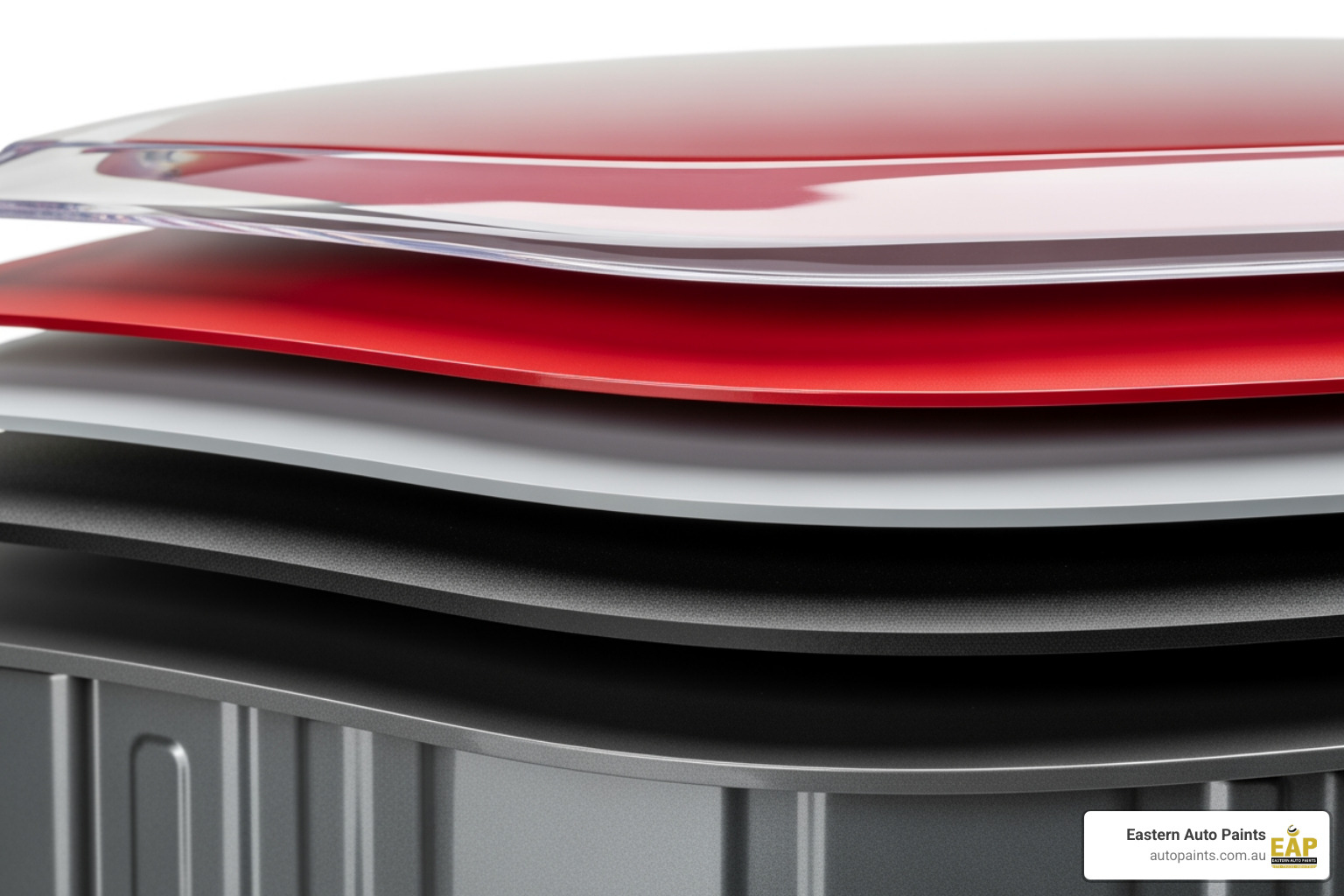
Automotive paint finish is the protective and decorative coating system applied to a vehicle's body, typically consisting of multiple layers, including primer, basecoat, and clearcoat. Here's what you need to know:
| Component | Purpose | Typical Thickness |
|---|---|---|
| Clearcoat | UV protection, gloss, scratch resistance | About 0.045 mm |
| Basecoat | Colour and visual effects (metallic, pearl) | About 0.01 to 0.02 mm |
| Primer | Adhesion, corrosion protection, surface levelling | About 0.025 mm |
| E-coat | Corrosion resistance | About 0.02 mm |
| Phosphate | Metal preparation, rust prevention | About 0.005 mm |
Total system thickness: Approximately 0.1mm
When you look at a car, one of the first things that catches your eye is the paint. A flawless, even coat makes a vehicle desirable and valuable, while faded or chipped paint can instantly diminish its worth. But automotive paint finish is far more than just aesthetics. It's a sophisticated protective system engineered to shield your vehicle's metal body from corrosion, UV radiation, chemicals, and the everyday assault of road debris and weather.
Modern automotive paint has evolved dramatically over the past few decades. What was once a simple single-layer application has transformed into a precisely engineered multi-layer system, with each layer serving a distinct protective or aesthetic purpose. Understanding these layers, the different finish types available, and how they impact your vehicle's maintenance and longevity is essential, whether you're planning a full restoration, repairing minor damage, or simply choosing your next car's colour.
The chemistry behind automotive paint has also shifted significantly. Environmental regulations have driven the industry away from high-VOC (Volatile Organic Compounds) solvent-based lacquers, which could release up to 85% of their content into the atmosphere, toward more sustainable waterborne systems. Today's water-based acrylic polyurethane enamel paints deliver superior durability and environmental performance, representing a major advancement in coating technology.
Beyond the base chemistry, the visual finish you choose (gloss, metallic, pearl, or matte) dramatically affects not just how your vehicle looks but how it needs to be maintained and how well it holds its value. Popular neutral colours like white, black, grey, and silver dominate the market in North America, with white leading at 23 percent, followed by black at 19 percent. But colour is only part of the story; the type of finish and the quality of its application determine whether your paintwork will remain stunning for years or begin to fail prematurely.
My name is James Maranis, and I've spent over 30 years working in the coatings industry, specialising in automotive paint finish systems from classic car restorations to cutting-edge waterborne technologies. At Eastern Auto Paints, we've helped thousands of customers achieve professional results by matching them with the right products and guidance for their specific needs.
Automotive paint finish vocabulary:
The Anatomy of a Car's Finish: Layers, Components, and Systems
A car's paint job is far more than just a splash of colour; it's a carefully engineered system of layers, each with a specific job. Think of it as a sophisticated shield for your vehicle, providing both protection and aesthetic appeal. Understanding this intricate structure is key to appreciating the complexity and durability of a quality automotive paint finish.
The Core Components of Automotive Paint
Every type of automotive paint finish is essentially a blend of four key ingredients, each playing a crucial role in its performance and appearance:
- Pigments: These are the particles that provide the paint's colour. In simple terms, they give the paint its visual hue.
- Binders (Resins): Often referred to as resins, binders are the "glue" that holds the pigments together and adheres the paint to the vehicle's surface. They are critical for durability, flexibility, and resistance to environmental factors. Modern binders, such as those found in acrylic-polyurethane hybrid dispersions, form interpenetrating polymer networks (IPNs) that create incredibly tough and homogeneous coatings.
- Solvents: These liquids dissolve the other components and allow the paint to be applied smoothly. As the paint dries, the solvent evaporates, leaving the solid film. Historically, solvent-borne paints contained high levels of volatile organic compounds (VOCs). However, environmental regulations have driven a significant shift towards water as a primary solvent, reducing VOC emissions. We offer advanced solutions like solvent recycling machines to help manage these materials responsibly.
- Additives: These are special chemicals added in small amounts to improve specific properties of the paint. They can improve UV resistance, flow, levelling, scratch resistance, and even provide unique effects like metallic or pearlescent sparkle.
More Than Just Looks: The Protective Function of Paint
While the vibrant colour and glossy sheen of an automotive paint finish are what first capture our attention, its primary function extends far beyond mere aesthetics. The paint system acts as a crucial protective barrier for your vehicle's metal body.
Firstly, it provides robust corrosion prevention. Without this barrier, moisture and oxygen would quickly react with the metal, leading to rust. The initial layers, like the phosphate coat and the electrocoat (E-Coat), are specifically designed to bond with the metal and offer superior salt spray resistance, effectively stopping rust in its tracks. This foundational protection is vital for the structural integrity and longevity of the vehicle. For those looking to manage rust, our guides on beginner's rust repair and prevention and metal protection sprays offer valuable insights.
Secondly, the paint system shields against UV damage. The sun's ultraviolet rays can cause paint to fade, chalk, and degrade over time. Modern clearcoats contain UV inhibitors that absorb these harmful rays, protecting the underlying colour layers and maintaining the paint's vibrancy for longer.
Finally, a quality automotive paint finish offers chemical resistance and physical protection from environmental assaults. This includes everything from acid rain, bird droppings, and industrial fallout to minor abrasions from road debris. The total thickness of a modern automotive paint system, typically around 100 micrometres (0.1 mm or 0.004 inches), demonstrates the robust layering required to withstand these daily challenges. This comprehensive protection helps keep your financial investment from rusting away and maintains its value over time.
Understanding Paint Systems: From Single-Stage to Multi-Stage
The evolution of automotive paint finish systems has led to several distinct approaches, each offering different characteristics in terms of appearance, durability, and application complexity.
- Single-Stage Paint: This is the simplest system, where the colour and gloss are combined into a single application. Once cured, it provides both the hue and the protective shine. While not as common on modern passenger vehicles, it's often used for solid colours on commercial vehicles and trucks due to its practicality and durability. Non-metallic solid colours like white and red are frequently seen in single-stage applications.
- Basecoat/Clearcoat System: This is the most widely used system on modern vehicles. It involves two distinct layers: a basecoat that provides the colour (and metallic or pearlescent effects) but dries flat, followed by a separate, transparent clearcoat. The clearcoat provides the gloss, UV protection, and resistance to scratches and chemicals. This system offers superior depth, durability, and a longer-lasting shine compared to single-stage paints. We supply a wide range of basecoat mixed colours and high-quality Protec topcoat solutions. For more in-depth information, our guide on The Ultimate Guide to Automotive Clearcoats is an excellent resource.
- Tri-Coat (or Multi-Stage) System: This advanced system builds upon the basecoat/clearcoat by adding an extra layer. It typically involves a coloured basecoat, followed by a translucent mid-coat containing pearl or special effect pigments, and then topped with a clearcoat. This creates exceptional depth of colour, unique colour-shifting effects, and a luxurious appearance. These systems are commonly found on high-end or premium vehicles, particularly for pearlescent whites and other nuanced colours, though they are more complex and costly to repair.
Waterborne vs. Solvent-Borne: The Environmental Shift
The choice between waterborne and solvent-borne paint systems represents a significant fork in the road for the automotive paint industry, largely driven by environmental concerns and regulations.
Historically, solvent-borne paint systems were the standard. These paints use organic solvents to carry the paint solids, which evaporate during the drying process, releasing a high volume of Volatile Organic Compounds (VOCs) into the atmosphere. For instance, traditional lacquer paints could see up to 85% of their content evaporate, contributing significantly to air pollution. While they offer excellent flow and ease of application, the environmental impact has become a major concern.
The shift towards waterborne paint systems began in earnest as environmental regulations became stricter. These paints use water as the primary carrier, drastically reducing VOC emissions. Modern water-based acrylic polyurethane enamel paints are now the most widely used for automotive applications, offering comparable or even superior durability and finish quality. Their advantages include reduced environmental impact, better working conditions (fewer fumes), and often improved colour match stability. However, waterborne paints can require specific application techniques and drying conditions.
Both types require proper safety measures during application. For solvent-borne paints, robust ventilation and respiratory protection are paramount due to high VOCs. Even with waterborne paints, which are lower in VOCs, proper personal protective equipment (PPE) is essential, especially when dealing with hardeners in 2K systems. For spray applications, standard respirators are often insufficient. We always advise following a workplace risk assessment and using atmosphere-supplying systems, such as air-fed masks, to ensure safety. Our PPE masks comparison guide can help you understand the options.
A World of Choice: Types of Automotive Paint Finish
The visual appeal of an automotive paint finish is undeniable, and the variety of finishes available today allows for incredible customisation and expression. Beyond just colour, the type of finish you choose dramatically impacts how your vehicle looks, how it needs to be maintained, and even its long-term durability.
Solid/Gloss Automotive Paint Finish
The solid/gloss automotive paint finish is perhaps the most classic and widely recognised type. Characterised by its high shine and reflective qualities, a gloss finish creates a mirror-like effect that makes a vehicle truly stand out. Solid colours, as the name suggests, contain only pigment and no metallic or pearlescent flakes, resulting in a uniform, pure hue.
These finishes are known for their timeless appeal and are often the easiest to colour match for repairs. However, their highly reflective nature also means that imperfections like swirl marks, scratches, and dirt are more noticeable, requiring diligent maintenance to preserve their pristine appearance. Regular washing with appropriate products and the application of waxes or sealants are essential. For optimal durability and a deep, lasting shine, a high-quality 2K clear coat is crucial over the colour. We also stock a wide array of acrylic mixed colours to achieve these classic looks.
Metallic Finish
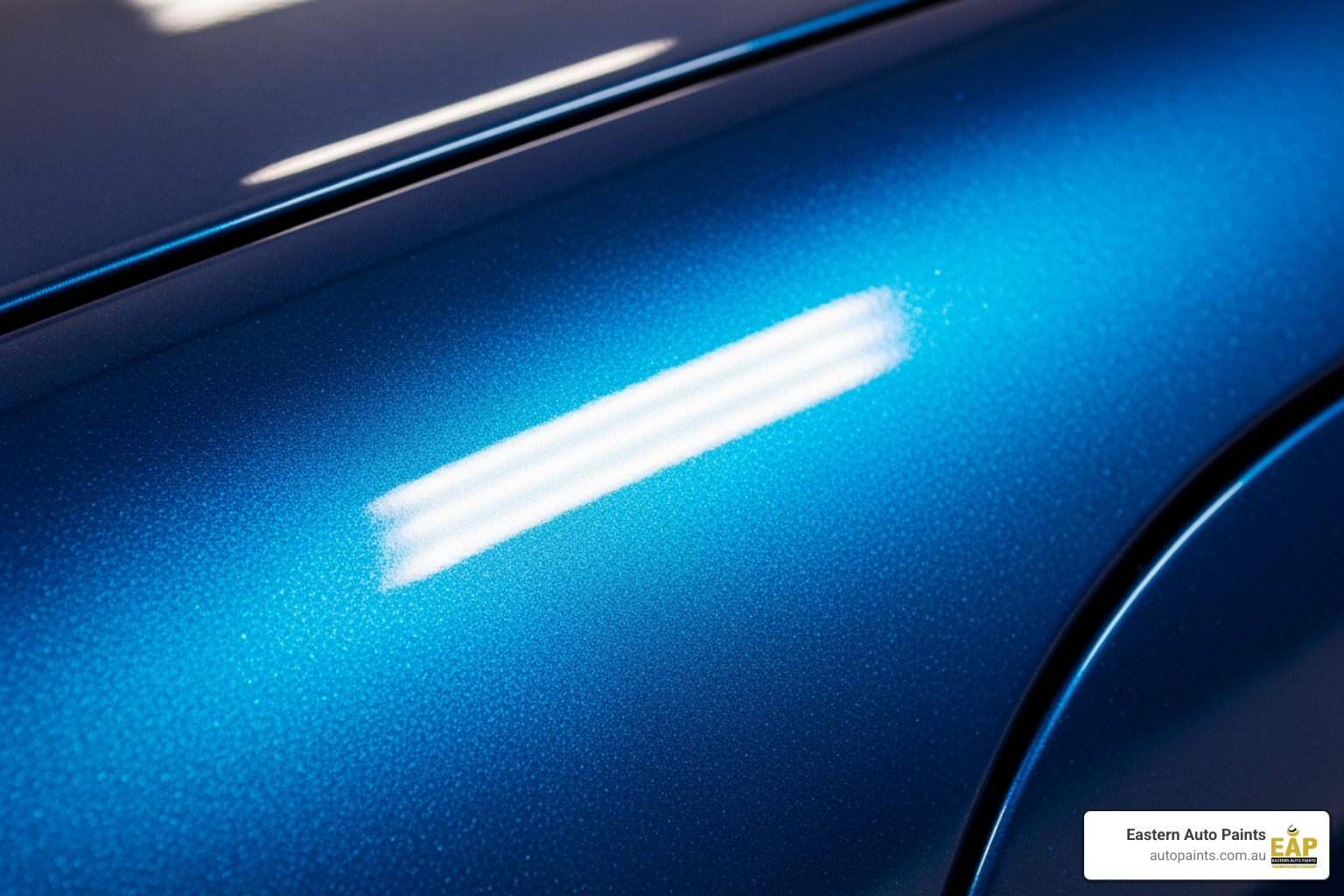
A metallic automotive paint finish introduces a captivating sparkle and depth that solid colours cannot achieve. This effect comes from tiny aluminium flakes mixed into the basecoat. These flakes catch and reflect light, creating a shimmering, dynamic appearance that improves the contours of the vehicle.
One of the key characteristics of metallic paint is its "flop" – the phenomenon where the colour appears lighter or darker depending on the viewing angle. This is due to the orientation of the aluminium flakes. Metallic finishes are also excellent at hiding minor imperfections and swirl marks better than solid gloss finishes, making them a popular choice for daily drivers. For custom projects, we can provide custom aerosol solutions to perfectly match metallic shades.
Pearlescent Finish
Taking visual complexity a step further, a pearlescent automotive paint finish offers a unique iridescent and colour-shifting effect. This is achieved by incorporating mica particles or other transparent, reflective materials into a translucent mid-coat, typically applied over a base colour. When light hits these particles, it's refracted and reflected, creating a soft, glowing effect that appears to change subtly with different angles and lighting conditions.
Pearlescent finishes are renowned for their incredible depth of colour and luxurious appearance. They are often applied using a tri-coat system, involving a base colour, a pearlescent mid-coat, and a final clearcoat, which adds to their complexity and cost. Achieving a perfect repair or colour match for a pearlescent finish requires significant expertise due to these multiple layers and the specific orientation of the mica particles. Our colour matching experts are adept at handling these challenging shades.
Satin & Matte Automotive Paint Finish
For those seeking a departure from the traditional high-gloss look, satin and matte automotive paint finishes offer a sophisticated, understated aesthetic. These finishes are characterised by their low-sheen, non-reflective appearance, absorbing light rather than reflecting it. A matte finish has virtually no shine, creating a flat, understated look, while a satin finish offers a soft, subtle sheen that sits between matte and gloss.
These modern finishes provide a distinctive and often aggressive appearance that improves a car's lines. However, they come with unique maintenance considerations. Unlike gloss paint, you cannot polish or wax a matte or satin finish to remove scratches or restore shine, as this would create shiny spots and ruin the uniform flat look. They require specialised cleaning products and techniques to avoid burnishing the surface or creating unevenness. For durable low-sheen options, products like Ranger's 2K Coating can provide excellent results. We also offer textured spray paint for unique tactile finishes.
From Showroom to Workshop: Choosing, Applying, and Maintaining Your Finish
Selecting, applying, and maintaining an automotive paint finish are all critical steps that impact your vehicle's appearance, durability, and value. Whether you're a professional technician or a keen DIY enthusiast, understanding these processes is vital for achieving a result that truly lasts.
Choosing the Right Finish for Your Vehicle
When it comes to selecting an automotive paint finish, several factors beyond personal preference come into play. Your choice can significantly impact vehicle maintenance, durability, and even resale value.
Firstly, consider your personal style and the image you want your vehicle to project. Do you prefer the classic brilliance of a gloss, the dynamic sparkle of a metallic, the luxurious depth of a pearlescent, or the modern edge of a matte finish?
Secondly, assess your maintenance commitment. As we've discussed, some finishes, particularly matte and certain high-gloss or multi-stage paints, demand more specialised and diligent care. If you're looking for a more forgiving finish for a daily driver, a metallic or satin finish might be a more practical choice.
Finally, think about resale value. Neutral colours like white, black, grey, and silver consistently top popularity charts and generally hold their value better. In North America, white is the most popular at 23%, followed by black (19%), grey (17%), and silver (15%). While a vibrant red (10%) or blue (8%) can be appealing, overly trendy or unique colours might narrow your potential buyer pool when it comes time to sell. Geography also plays a role; a black car might be less desirable in a hot climate like Melbourne in summer. The vehicle type matters too; a sports car can often pull off a bold colour more successfully than a family sedan without negatively impacting resale. When selecting colours or considering touch-ups, our custom aerosol solutions can help you match existing shades perfectly.
The Critical Role of Preparation and Priming
Regardless of the type of automotive paint finish you choose, the quality of the final result hinges almost entirely on meticulous surface preparation and the correct application of primer. We've found that most adhesion issues come down to poor surface prep, and this is a step you simply cannot rush or compromise on.
Preparation begins with thoroughly cleaning the surface, ensuring it is free of dirt, grease, wax, and oil. Any existing rust must be completely removed and treated with an appropriate rust converter or anti-corrosive primer. For larger repairs, body fillers are used to smooth out dents and imperfections, followed by careful sanding to create a perfectly level and smooth substrate. Our range of body fillers and paint strippers provides the essential tools for this stage.
Once the surface is clean and smooth, primer application is next. Primer serves multiple critical functions: it promotes adhesion for subsequent paint layers, provides an additional layer of corrosion protection, and helps level out any minor surface defects. There are various types of primers, including etch primers for bare metal, epoxy primers for superior adhesion and corrosion resistance, and high-build primers for filling minor scratches. Understanding these options is crucial, and our guides on choosing automotive paint primer types and the guide to epoxy primer paint for cars offer detailed insights. Our 2K primers provide excellent filling and adhesion for professional results.
A quick note on epoxy primers: while they offer superior moisture resistance, they can be affected by UV exposure and may require sanding if left uncoated for several weeks before the next layer is applied.
The Application Process: Achieving a Flawless Result
The application process for an automotive paint finish differs significantly between factory production and aftermarket repairs, influencing both the techniques and equipment used.
Factory finishes are applied in highly automated, dust-free environments using robotic arms. This ensures an incredibly uniform paint thickness, typically around 100 micrometres (0.1 mm or 0.004 inches), and consistent quality. Vehicles then pass through large ovens for rapid and thorough curing at high temperatures (around 140°C or 284°F for body paint). This industrial-scale process prioritises speed, efficiency, and flawless results.
Aftermarket applications, whether in a professional body shop or a home workshop, rely on skilled technicians and specialised equipment. The process typically involves manual application using high-quality spray guns powered by robust compressors. Brands like Anest Iwata offer a range of compressors and spray guns that are trusted by professionals for their precision and reliability. The spray environment must be as clean and controlled as possible to prevent dust and contaminants from marring the finish.
Curing in aftermarket settings often involves heated spray booths or the use of infrared drying lamps to accelerate the drying process and ensure proper hardening of the paint layers. The ideal working temperature for most coatings is between 20-25°C (68-77°F).
Safety is paramount during application, especially when working with modern paint systems, including 2K products that contain isocyanates. Adequate ventilation and appropriate air-fed masks are non-negotiable to protect against harmful fumes and particulates. We always recommend consulting a workplace risk assessment to determine the necessary PPE.
Long-Term Care: Maintaining Your Paint's Lustre
Once you've achieved a stunning automotive paint finish, the work isn't over. Proper long-term care is essential to maintain its lustre, protect its integrity, and extend its lifespan. The best practices for maintenance will vary slightly depending on the type of finish.
For gloss and metallic finishes, regular washing is key. Use a pH-neutral car wash soap and soft wash mitts to prevent swirl marks. Follow up with a high-quality wax or sealant every few months to provide an extra layer of protection against environmental contaminants and improve the shine. Minor scratches can often be buffed out, and for deeper scratches, touch-up paint spray cans can be invaluable.
Pearlescent finishes also benefit from regular washing and sealing to protect their unique depth and sparkle. Be mindful of abrasive products, as they can dull the effect.
Matte and satin finishes require the most specialised care. Never use abrasive polishes, waxes, or compounds, as these will create shiny spots and ruin the flat look. Instead, opt for car wash soaps and sealants specifically designed for matte finishes. Always wash gently to avoid burnishing the surface.
Regardless of the finish, always park your vehicle in shaded areas when possible to minimise UV exposure, and promptly remove bird droppings, tree sap, and insect residue, as these can etch into the paint if left for too long. With consistent care, your automotive paint finish can look showroom-fresh for years to come.
Frequently Asked Questions about Automotive Paint Finishes
What are the main components of car paint?
Automotive paint is a blend of four key ingredients: pigments for colour, binders (resins) for adhesion and durability, a solvent (or water) to create a liquid consistency for application, and additives that provide special properties like UV protection and improved flow. Each component is crucial for achieving a lasting and protective finish.
How do I choose the right paint for a repair?
For a seamless repair, match the original paint system. Most modern cars use a basecoat and clearcoat system. The most important step is accurate colour matching, which considers not just the colour but also the finish (metallic, pearl, etc.). For expert help, it's always best to contact a professional.
Is a matte finish harder to maintain than a gloss finish?
Yes, matte finishes require more specialised care. Unlike gloss, you cannot polish out scratches, as this would create a shiny spot. They need specific matte-safe soaps and sealants and must be cleaned carefully to avoid burnishing the surface. While stunning, they are less forgiving than traditional gloss finishes.
Conclusion
Understanding automotive paint finishes goes far beyond just picking a colour. It's about choosing a complex system that provides crucial protection, defines your vehicle's character, and impacts its long-term value and maintenance. From the foundational primers that guard the metal to the final clearcoat that delivers the shine, every layer plays a vital role. Whether you're undertaking a full restoration or a simple touch-up, using high-quality products and the right techniques is the key to a finish you can be proud of. For over 34 years, the experts at Eastern Auto Paints have been Melbourne's trusted source for premium automotive and industrial paint supplies. If you need advice or the right products for your project, browse our extensive range of auto paints or get in touch with our team today.