
Mastering the Art of Paint and Panel Work
What Paint and Panel Work Really Involves (And Why Getting It Right Matters)
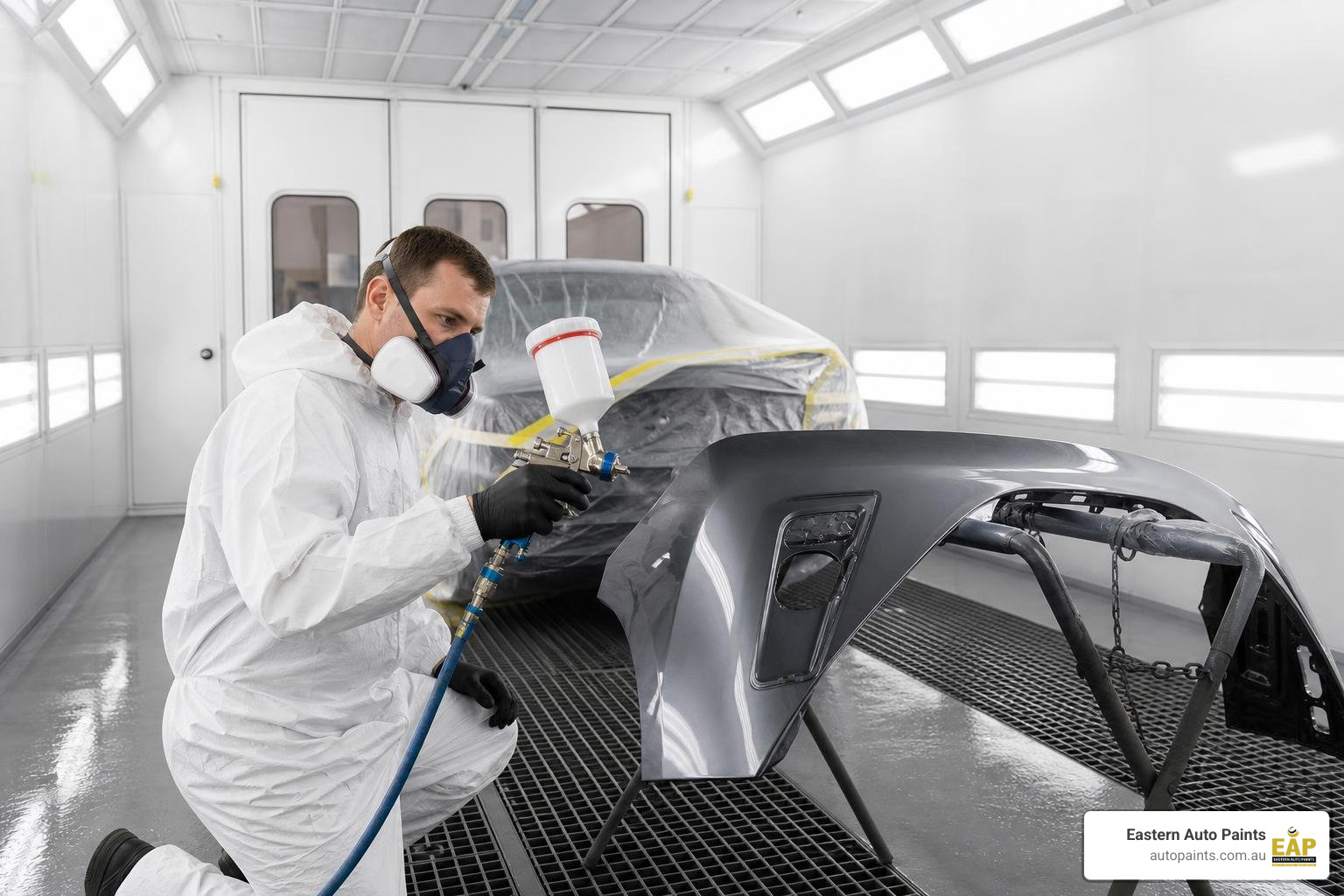
Paint and panel work covers everything from repairing a minor car park dent to a full structural rebuild and respray after a collision. If you've ever received a vehicle back from a repair shop that looked close but not quite right, you already know how much the details matter.
Here's a quick overview of what professional paint and panel work involves:
- Panel repair - straightening, reshaping, or replacing damaged body panels after impact or corrosion
- Surface preparation - removing old paint, treating rust, applying body filler, and sanding to a smooth finish
- Priming - applying the correct primer system to promote adhesion and protect against corrosion
- Colour matching - using paint codes and spectrophotometer (colour-measuring device) analysis to reproduce your vehicle's exact factory colour
- Topcoat application - spraying the matched colour in either a single-stage or basecoat system
- Clearcoat protection - sealing the finish with a clear layer to protect against UV damage, chips, and weathering
- Finishing and inspection - cutting, polishing, and checking the repair against the surrounding panels in natural light
Getting each of these stages right requires the correct products, properly calibrated equipment, and a clear understanding of how each layer interacts with the next. Rushing any step or using the wrong materials will show up in the final finish, sometimes immediately, sometimes months later when a repair begins to peel, fade, or lift.
At Eastern Auto Paints (EAP), we work with panel beaters, spray painters, and serious restorers every day, supplying professional-grade coatings, colour-matched paints, and application equipment from trusted brands including PPG, Jotun, Concept Paints, and Anest Iwata. Our goal is straightforward: give you the right products, the right technical guidance, and the confidence to achieve a finish that lasts.
Key Takeaways
- Paint and panel repair is a multi-stage process where each layer depends on the one beneath it being done correctly.
- Colour matching accuracy relies on both the right technology and the right paint system. Our Colour Matching Services are built around thousands of saved formulations for consistent results.
- Professional-grade products from brands like PPG and Concept Paints are available to both trade professionals and serious DIY restorers through EAP.
- Always refer to the manufacturer's technical data sheet (TDS) for exact mixing ratios, application steps, and drying specifications for every product you use.
- EAP operates from two Victorian locations (Bayswater and Dandenong South) and ships Australia-wide, making professional coatings and equipment accessible wherever you are.
- Early intervention matters. Addressing paint damage or panel damage before rust takes hold protects your vehicle's structure and its resale value.
I'm James Maranis, owner of Eastern Auto Paints, and I've spent more than 30 years working across automotive and industrial coatings, giving me a deep understanding of what makes a paint and panel job succeed or fail at every stage. Throughout this guide, I'll share what I've learned about choosing the right products, working through the repair process correctly, and getting results you can rely on.
To achieve a professional finish, mastering the paint and panel basics is essential. This includes selecting high-quality refinishing products such as Protec Topcoat and Protec clear coat to ensure excellent coverage and long-lasting protection. Additionally, understanding the correct techniques for auto paint application is critical to avoiding common defects and securing a flawless result.
Why This Issue Should Not Be Ignored
When a vehicle suffers panel damage or paint scratches, it is easy to view the issue as purely cosmetic. However, delaying repairs can lead to serious long-term consequences. The outer panels of a modern vehicle do more than just look good; they form a protective envelope that shields the underlying structural steel from environmental elements.
Once the paint film is broken, moisture and oxygen gain direct access to the bare metal. This initiates rust propagation, a chemical reaction that can quickly spread beneath the surrounding paintwork. What begins as a tiny stone chip or a minor car park scrape can transform into structural rust, compromising the integrity of the panel. Understanding how to manage these early signs of oxidation is critical, and we explore these foundational steps in our Beginners guide to rust repair and prevention. For a complete range of solutions, you can browse our rust prevention and treatment collection.
Leaving panel damage unaddressed also introduces significant safety risks and affects the vehicle's resale value. In Melbourne's diverse climate, vehicles are subjected to intense UV radiation, coastal salt air, and heavy seasonal rainfall. This harsh environmental exposure accelerates paint degradation. Over time, UV rays break down the clearcoat, causing it to peel and chalk, leaving the colour coat completely unprotected.
By intervening early, you protect the structural integrity of the vehicle, prevent expensive metal replacement work, and ensure the car retains its market value. Whether you are running a high-volume collision shop in Dandenong South or restoring a classic car in your Bayswater garage, proactive maintenance is always more cost-effective than extensive rust excision.
Common Symptoms, Challenges, or Questions
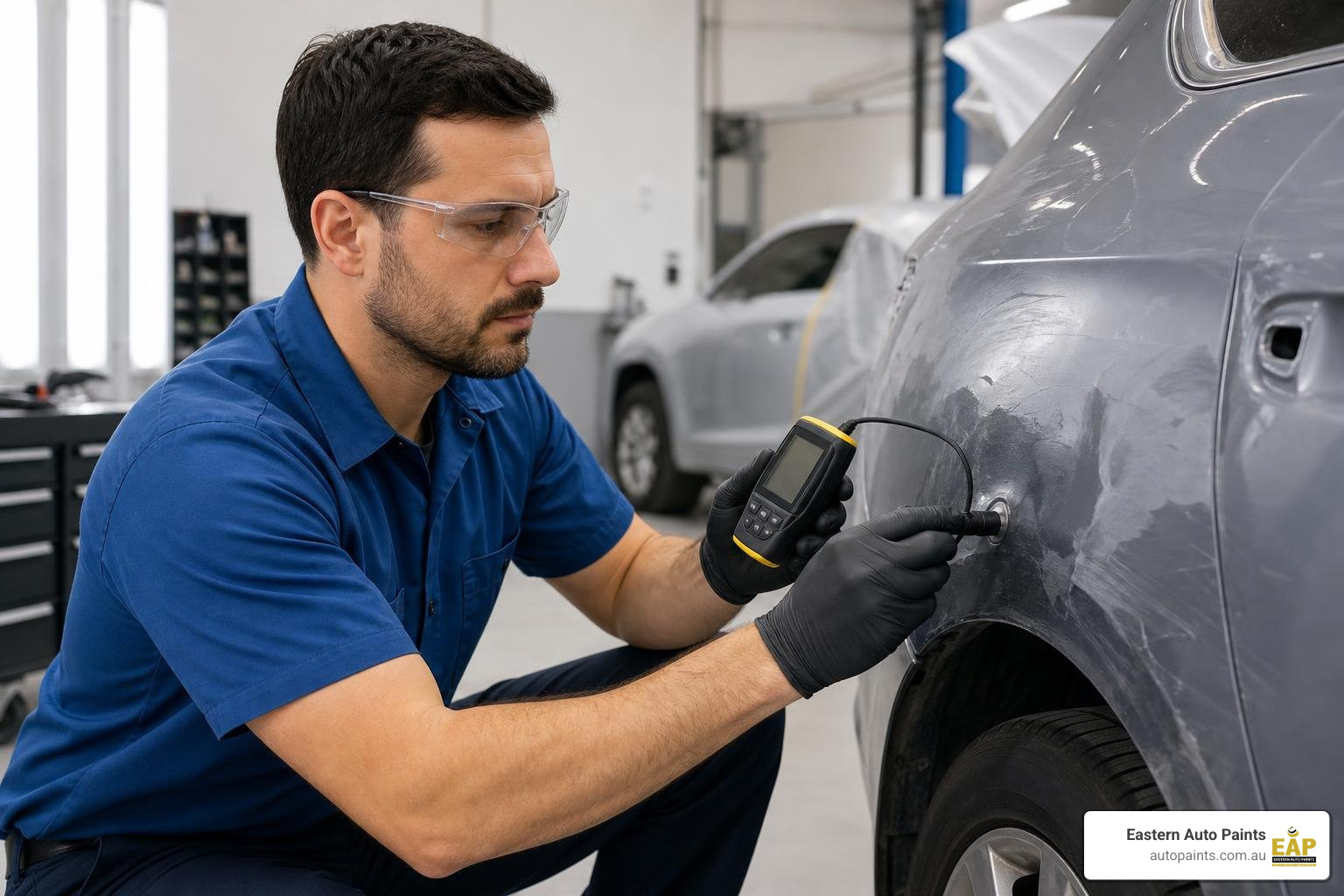
Every paint and panel project presents its own unique set of challenges. Technicians must carefully assess the vehicle to identify surface imperfections, structural misalignment, and technological factors before picking up a spray gun.
Modern vehicles are highly sophisticated machines. Beyond the physical metalwork, workshops must now navigate advanced driver-assistance systems (ADAS) and electric vehicle (EV) safety protocols. Sensors for emergency braking, blind-spot monitoring, and lane-keep assist are frequently mounted directly behind bumper bars and side panels. Even a minor panel repair or a slightly thicker layer of paint can disrupt these sensors, requiring precise recalibration to ensure driver safety.
Additionally, the rise of electric vehicles has introduced strict safety standards. Working near high-voltage battery packs requires specialised training and temperature-controlled curing environments, as excessive heat in a traditional spray booth can damage sensitive battery components.
Before paint can even be mixed, the foundation must be flawless. Surface preparation remains the most demanding phase of any refinishing project. Any lingering grease, wax, or dust will prevent the primer from adhering, leading to paint peeling or fish-eyes in the final finish.
Choosing the right paint system is equally critical. To help you understand the core differences between single-pack and two-pack systems, we have outlined their distinct characteristics below:
| Coating Type | Curing Method | Typical Use Cases | Key Characteristics |
|---|---|---|---|
| 1K Coatings | Air drying / solvent evaporation | Quick touch-ups, minor repairs, and projects where simplicity is preferred | Easy to apply, single-component, user-friendly for rapid turnaround |
| 2K Coatings | Chemical cross-linking via hardener | Complete panel resprays, heavy-use commercial vehicles, and high-durability finishes | Exceptional chemical resistance, high gloss retention, outstanding weather protection |
Navigating the Complexities of Paint and Panel Repairs
The physical repair of a panel is a true craft, blending heavy metalwork with delicate hand finishing. Panel beating involves carefully massaging dented metal back to its original shape using specialised hammers, dollies, and pullers. For minor car park dings where the paint remains completely intact, paintless dent repair (PDR) is an excellent, non-invasive option. However, when the metal has been stretched or creased, traditional panel beating and chassis alignment are required to restore the vehicle's correct factory dimensions.
Once the metal is structurally sound, the surface must be levelled. This is where high-quality body filler comes into play. Applying filler correctly is an art form in itself. To achieve a seamless transition between the metal and the filler, you need to understand the right application techniques, which we cover in How to bodyfiller like a pro.
It is also important to choose the right material for the specific repair. If you are wondering what product suits your vehicle, you can read more in our guide on What is body filler for cars.
After application, the filler must be sanded flat. Selecting the correct abrasive paper ensures you do not leave deep scratches that will show through the paint. For detailed advice on choosing your abrasives, refer to What grit sandpaper for body filler.
Finally, the repaired area must be sealed with a high-performance primer to protect the metal and provide a stable base for the colour coat. To help you choose the right primer chemistry for your substrate, we have compiled the essential options in A practical guide to choosing auto paint primers.
Overcoming Colour Matching and Finish Hurdles
Achieving an invisible repair requires flawless colour matching and blending. Modern automotive finishes are incredibly complex, containing pearls, metallics, and multi-stage xirallic pigments that shift in appearance depending on the light source and viewing angle. Even if you have the factory paint code, factors like paint batch variations at the assembly plant, weathering, and UV exposure mean the paint on the vehicle may differ slightly from the standard formula.
To overcome this, professional colour matching relies on state-of-the-art spectrophotometer analysis. This advanced tool measures the paint on the vehicle from multiple angles, allowing us to find or adjust the formula to match the actual condition of your car. If you are preparing for a respray, our Car paint colour matching guide provides a comprehensive look at how to navigate these paint code variations.
Once the colour is matched, the technician must blend the new paint into the adjacent panels to trick the eye, followed by the application of a high-quality clearcoat. The clearcoat provides the gloss, depth, and vital UV protection that keeps the paint from fading. To understand the role this final layer plays in your finish, check out Does it really matter the ultimate guide to automotive clearcoats.
Rushing this stage or ignoring the manufacturer specifications can lead to common finish defects, such as "orange peel" (a textured surface resembling a citrus skin), paint runs, or solvent trapping. To avoid these issues, always check the technical data sheets for correct flash-off and curing times.
What a Personalised Experience Actually Looks Like

At Eastern Auto Paints, we believe that providing paint and equipment is only half the job. The real value lies in a collaborative, personalised approach. Whether you are a trade professional running a busy panel shop or a dedicated enthusiast working on a classic restoration, we take the time to understand your specific project requirements, your workshop conditions, and your skill level.
When you connect with our team, you receive direct access to technical consultations and genuine trade support. We do not just hand over a can of paint; we discuss the entire coating system. We help you select the right primer, the correct hardeners and reducers for the ambient temperature of your workshop, and the optimal clearcoat for the desired gloss level.
By aligning our product selection with your specific application environment, we ensure you get a reliable, high-quality result without wasting time or materials. Every product we supply is backed by official manufacturer technical data sheets (TDS), ensuring you have the exact specifications for success.
Tailored Paint and Panel Solutions for Trade Professionals
For high-volume collision repair centres and independent workshops, consistency and efficiency are the keys to profitability. We establish strong trade partnerships across Melbourne, offering tailored solutions that streamline workshop operations. From supplying high-performance commercial coatings to implementing advanced colour systems, we help workshops maintain a rapid vehicle turnaround.
We supply robust industrial and commercial systems, including specialised coatings designed for heavy-duty applications. For example, trade customers looking for durable, high-build commercial finishes can find deep insights in our article, Industrial coatings made easy a deep dive into PPG Selemix.
We also understand that not every job requires a full spray gun setup. For minor touch-ups, edge painting, or hard-to-reach areas, custom aerosol cans are an incredibly efficient solution. We can mix your exact vehicle colour and pack it into a professional-grade aerosol can, providing an on-the-spot solution that matches your workshop's quality standards. Learn more about these convenient options in our guide, Get your perfect shade custom aerosol solutions for every project.
The Value of Consistency and an Ongoing Relationship
In the collision repair industry, trust and consistency are built over time. One of the greatest advantages of partnering with Eastern Auto Paints is our commitment to maintaining a detailed history of your custom formulations. When we perform a custom colour match for a specific vehicle or fleet, we save that exact formulation in our database. This ensures that when the vehicle returns for future repairs, or when you need to paint a matching panel years down the track, the colour is perfectly consistent.
This level of reliability is why Melbourne's leading trade professionals choose to build ongoing relationships with us. As a PPG "Select Distributor," a certified Jotun Australia distributor, and the master wholesale distributor for the South East Victoria region of Concept Paints, we guarantee access to authentic, professional-grade products.
We do not deal in cheap, unbranded alternatives; we provide dependable supply chains that protect your business continuity. Having a trusted partner means you can accept complex jobs with the confidence that the correct technical advice, coatings, and equipment are always readily available.
What to Expect at Eastern Auto Paints
When you step into our Bayswater head office or our Dandenong South trade showroom and warehouse, you are entering a professional, trade-focused environment. We have designed our spaces to cater directly to the needs of working professionals and serious automotive restorers. You will not find generic house paint or cheap craft supplies here; instead, our shelves are stocked with premium, industry-standard brands.
Our team is always on hand to provide expert advice on our extensive range of professional-grade equipment. If you are looking to upgrade your spray equipment, we can guide you through the latest technology, including premium spray guns. We stock and recommend high-performance options such as the Sata Jet X Digital Pro, Sata Jet X Digital, Sata Jet X Basic, and the Satajet 100B Black Edition.
| Spray Gun Model | Digital Display | Atomization Type | Primary Application |
|---|---|---|---|
| Sata Jet X Digital Pro | Yes (Integrated) | Premium X-Nozzle System | High-end automotive clearcoats and basecoats |
| Sata Jet X Digital | Yes | Standard High-Efficiency | Professional refinishing and colour matching |
| Sata Jet X Basic | No | Standard High-Efficiency | General automotive and industrial topcoats |
| Satajet 100B Black Edition | No | RP / HVLP | Primers, fillers, and high-build undercoats |
We also understand that a spray gun is only as good as the air feeding it. Clean, dry, and consistent compressed air is vital for a flawless paint finish. To help you select and maintain the heart of your workshop's air system, we supply premium Anest Iwata compressors. For a complete overview of setup and maintenance, we have compiled an essential resource in our Compressor complete guide.
When to Get in Touch or Take Action
Knowing when to seek professional product guidance can save you thousands of dollars in wasted materials and rework. You should get in touch with our expert team at the very beginning of your project. Whether you are dealing with collision damage, planning a complete vintage vehicle restoration, managing fleet maintenance, or embarking on custom paintwork, early planning is the key to an outstanding finish.
If you are planning a unique project and want to explore custom paint options, we can help you find the perfect aesthetic. You can browse our possibilities in Custom car paint colours.
Furthermore, if you have spotted the early signs of paint degradation or surface rust, immediate action is required to prevent the corrosion from spreading deep into the metalwork. For practical advice on treating and sealing affected areas before they require structural replacement, refer to our guide on Rust prevention and treatment, and explore our dedicated rust prevention and treatment collection. A quick consultation with our team ensures you use the correct system from day one.
Practical Solutions and Reassurance for Paint and Panel Projects
Taking on a paint and panel project can feel overwhelming, but breaking the process down into logical, conceptual stages brings structure and clarity to the work. Every successful refinishing job follows a precise sequence: surface preparation, priming, colour application, and clearcoat protection.
The first step is always thorough preparation. This involves stripping away old, damaged paint and treating any underlying corrosion. If you need to remove old coatings down to the bare metal safely, you can find the right approach in A practical guide to choosing paint stripper.
Once the metal is clean and repaired, a high-quality primer must be applied to seal the substrate and provide a stable foundation. For maximum corrosion protection and outstanding adhesion on steel and aluminium, an epoxy system is highly recommended. You can read about these high-performance coatings in The guide to epoxy primer paint for cars.
After the primer has cured and been sanded smooth, the colour coat is applied. This stage requires clean equipment, steady hand movement, and a dust-free environment. For expert tips on achieving a uniform colour laydown, check out our guide on Auto paint application.
Finally, the colour coat must be sealed with a durable clearcoat to provide gloss and protect the finish from Melbourne's harsh UV rays. Applying clearcoat can be challenging, but you can learn how to master this step with confidence in How to never worry about applying automotive clear coat again.
Please remember that exact specifications, mix ratios, and drying times vary significantly from product to product. Always check the manufacturer's technical data sheet or product label for the exact specifications before you start. Additionally, because different paint systems present unique chemical hazards, always consult the product safety data sheets (SDS) to select the correct personal protective equipment (PPE) and ensure your workshop meets SafeWork Australia guidelines.
Your Next Steps for Professional Refinishing Results
Achieving a professional-grade paint and panel finish is entirely possible when you have the right partner in your corner. By combining your hands-on skills with authentic, industry-standard coatings and the precision colour-matching technology of Eastern Auto Paints, you ensure a durable, beautiful finish that stands the test of time.
We are committed to supporting Melbourne's automotive community with expert advice, premium products, and dependable trade service. If you are ready to start your next project, or if you need help finding the perfect colour match, get in touch with our experienced team today.
Frequently Asked Questions About Paint and Panel Work
How do I choose between 1K and 2K products for a paint and panel job?
Choosing between single-pack (1K) and two-pack (2K) products depends entirely on the scale of your project, your workshop equipment, and the level of durability required. 1K products are single-component coatings that dry through solvent evaporation, making them highly convenient and easy to apply for minor touch-ups or quick repairs. 2K products utilise a chemical hardener that initiates a cross-linking reaction to cure, resulting in an incredibly tough finish with outstanding resistance to chemicals, weather, and mechanical wear. Because 2K coatings require precise mixing and specialised safety equipment, you should always consult the manufacturer's technical data sheets to ensure you have the correct setup for application.
How is precise colour matching achieved for modern vehicle finishes?
Precise colour matching is achieved by combining advanced digital technology with the expertise of experienced professionals. At Eastern Auto Paints, we utilise a high-precision spectrophotometer to analyse the paint directly on your vehicle, measuring the light reflection from multiple angles to account for any fading or batch variations. This data is matched against our database of thousands of saved formulations to find the perfect recipe. Once the formula is selected, we custom-mix the paint using premium systems to ensure an accurate match. For older vehicles or custom projects where the paint code is missing, finding the correct starting point is essential, and you can learn more about this in our guide on How to find paint code and our Colour matching complete guide.
What are the correct PPE and safety practices for paint and panel work?
Safety must always be your top priority when working with automotive paints, solvents, and body fillers. The specific personal protective equipment (PPE) required depends on the chemical composition of the products you are spraying. For example, two-pack (2K) coatings containing isocyanates require a constant supply of clean air, making air-fed face masks essential, while other solvent-based products may be safely applied using high-quality half-face cartridge respirators. To understand your options, refer to The complete guide to air fed face masks for automotive and industrial work and our PPE masks comparison 101. Always ensure your spray area is well-ventilated, wear chemical-resistant overalls and gloves, and consult the manufacturer's product safety data sheets (SDS) alongside SafeWork Australia guidelines before beginning.
Where can I find the exact technical specifications for mixing and drying times?
The only authoritative source for mixing ratios, reduction percentages, pot life, flash-off times, and drying specifications is the manufacturer's official technical data sheet (TDS) or the product label. Because these specifications vary significantly depending on the chemical formulation, ambient temperature, and application method, they should never be guessed or generalised. You can access the official TDS for any product we supply through our website, or you can speak directly with the Eastern Auto Paints team at our Bayswater or Dandenong South locations for expert guidance in finding the correct manufacturer instructions for your specific project.
Is professional-grade paint and panel equipment suitable for serious DIY restorers?
Yes, professional-grade paint and panel products are highly suitable for serious DIY restorers who are committed to achieving trade-quality results on their personal vehicle restorations. Using authentic, branded primers, body fillers, and topcoats ensures that your hard work is protected by a finish that will not lift, crack, or fade prematurely. While professional equipment like high-end spray guns and compressors requires a greater initial investment and a commitment to safe handling practices, the results are vastly superior to consumer-grade retail alternatives. Our team is always happy to provide the technical guidance and product recommendations needed to help passionate enthusiasts succeed, and you can learn more About Eastern Auto Paints and our commitment to quality service on our dedicated company page.